
Collections
After Editions
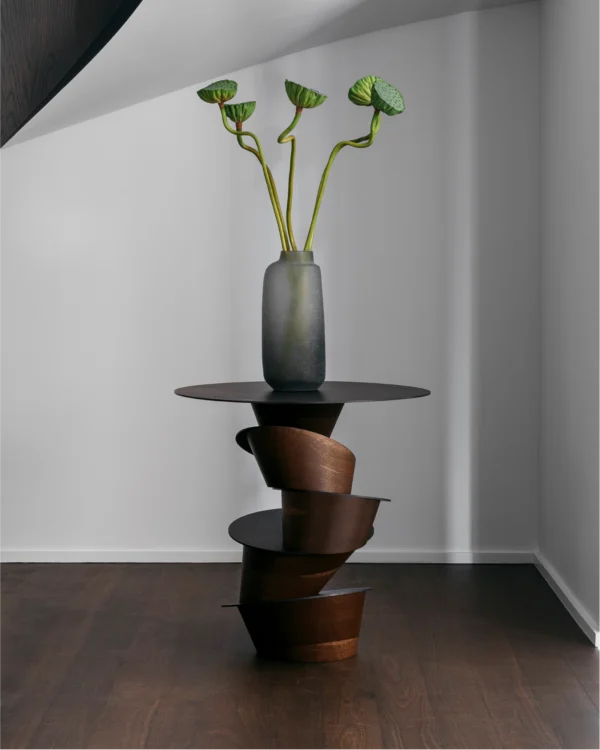
After Editions is a collective of creative talents, founded in 2023 by Dylan and Nicolette Farrell. We design objects that unite contemporary craftsmanship with courageous playfulness. Born of a love for collaging utility with ornament and constructivism with romance, our studio takes joy in tinkering with unexpected visual narratives that are grounded in classical sensibilities. Each object offered by After Editions is thoughtfully crafted in close collaboration with some of the world’s most talented artisans, combining age-old techniques with the most modern technologies available. Artistic risks are taken. Gimmicks are avoided. The goal is to offer heirloom pieces filled with undiluted personality. The current works in the collection have been widely published in Architectural Digest, Belle, Elle Décor, The Financial Review, The Hollywood Reporter, Interior Design, Interiors, Marie Claire Maison, New York Spaces, Veranda, Vogue, and Vogue Living – and the Modules Table won a Best of Year award from the esteemed Interior Design magazine.
Ashley Tudor
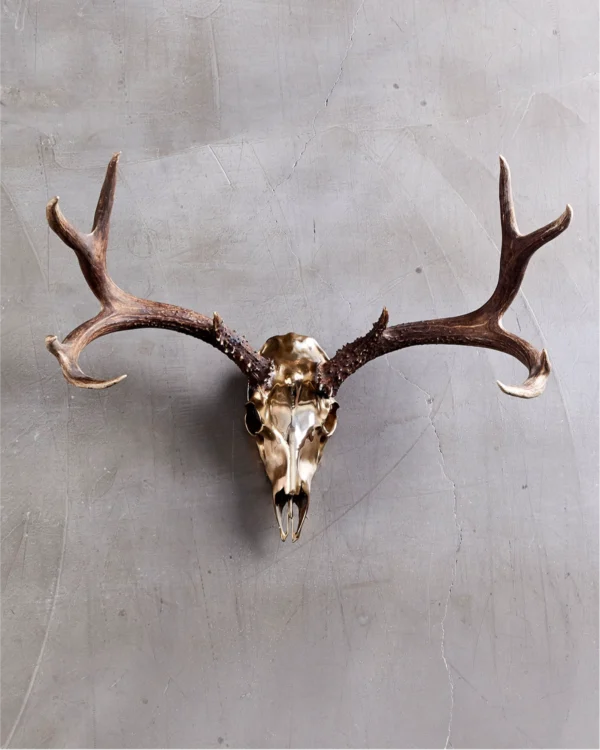
Ashley Tudor is a San Francisco-based artist. Her “Trophies” series explores the intersection of the natural world and the human role in it. Her primary medium is sculpture and mixed media. Ashley is an avid outdoorsman, hunter, and field to table chef. She loves any excuse to get into the mountains, valleys, and fields, especially to search out her own food. She is formally trained at Dartmouth College and has lectured at the California College of the Art, IDSA, and Stanford University.

Barovier&Toso
Few brands that exist today can claim to predate the Italian Renaissance, but Murano, Italy-based lighting company Barovier&Toso is one such brand. Founded in 1295 by the Barovier family, Barovier&Toso is credited as the world’s sixth-oldest business still in operation. For over 20 generations, these glassmakers have become masters in the art of Venetian glass. Many of the family’s early creations reside in museums and private art collections all over the world. In the 13th century, Jacobello Barovier became the first member of the family to begin working in glass. Around this time, an edict required all glassmakers in Venice to move to Murano, as all the glass furnaces were concentrated there. It is believed that the Barovier family established themselves in Murano in the early 1290s, and later records indicate the Toso family became a notable presence in Murano around 1350. The Barovier and Toso families joined forces in 1939, on the cusp of WWII, to become the glass powerhouse Barovier&Toso. At the time of the merger, the Barovier business was thriving under the creative direction of the legendary Ercole Barovier, employing new glassmaking techniques and unique types of glass. His designs are still in use today, including the Rostrato technique, which can be seen on the brand’s iconic Venezia 1295 chandelier. Erocles’ innovative approach to glassmaking still inspires Barovier&Toso’s designs for new pieces and collections.

BassamFellows
BassamFellows is a renowned furniture and design house celebrated for its exceptional craftsmanship and distinctive blend of creativity and character. With a legacy spanning two decades and three continents, the company has developed a design language characterized by purity, refinement, and visual pleasure. Its story revolves around purposeful beauty, encompassing handcrafted furniture adorned with sculpted wooden elements and meticulous leatherwork. BassamFellows was born from the collaboration of Australian architect Craig Bassam and American creative director Scott Fellows during influential European projects. Launched in Switzerland in 2003, it now calls Connecticut home, a region steeped in modernism’s history since the early 20th century. The brand’s post-luxury style is inspired by the surrounding architecture, blending functional simplicity with expressive form. Their work embodies a delicate touch, evident in the gracefully curved wood edges, harmonious ergonomic design paired with geometric precision, and the artful grain of the Tractor Stool and Circular Table Series. While “Modernism” is often misused, BassamFellows redefines it, harmonizing craft and industrial production. The design house unites restoration, study, and new design, bridging tradition and modernism, nature and culture. Their Craftsman-Modern ethos perpetually seeks enduring inspiration.

Brent Warr
Brent Warr is an artist and furniture maker who creates pieces that evoke emotion, allowing viewers to reach a more imaginative part of themselves. Warr designs and produces collectible furniture, lighting, and sculptural art by incorporating the mediums of plaster, epoxy, wood, and paint. From his studio in Bainbridge, GA, Warr begins with abstract drawings, which he transforms into functional and sculptural forms. Building every piece by hand, Warr applies a complex mixture of plaster, pulp, and epoxy to his designs in layers, then meticulously sculpts and sands them to achieve objects of beauty. Working in a variety of mediums, he pushes the limits of material and craftsmanship; his pieces are described as bold, with visual depth but restraint. As a child, his parents nurtured his creative ability by immersing him in nature and exposing him to antique furniture and art. This passion continued through his education and into his early career. He graduated from the College of Architecture, Design, and Construction at Auburn University and then went to work for esteemed firms Meyer Davis Studio and Yabu Pushelberg in New York City. These experiences honed his eye for design and exposed him to global collective design.
Christopher Boots
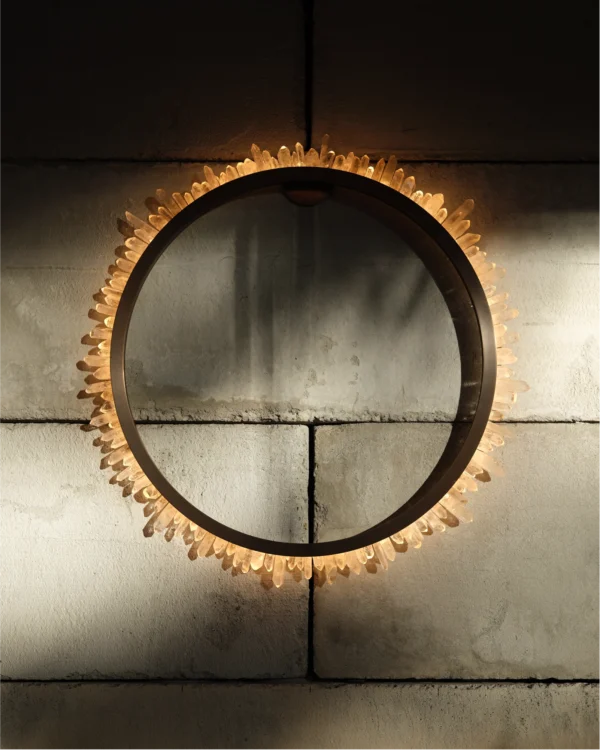
Christopher Boots is propelled by a deep reverence for nature and light, coupled with an unwavering dedication to achieving nothing less than excellence. With a background in industrial design, Boots channels his focus into creating lighting that is seen as an artistic sculpture. He draws inspiration from both the classical and metaphysical realms, paying homage to graceful proportions, meticulous intricacies, and a finely-tuned sculptural sensibility. Along this creative journey, he invokes mythical concepts surrounding creation and transformation. After studying literature and linguistics, Boots graduated from the National School of Design in Melbourne, Australia, establishing his eponymous studio on 11-11-11 and releasing his first lighting collection later that year. Operating out of Melbourne, the studio meticulously designs, prototypes, and crafts its creations. This process upholds the traditional principles of form and proportion while seamlessly merging conventional and cutting-edge materials through a range of techniques. The result is a series of future collectibles intended to transcend and enhance architectural spaces. The work of the studio has been displayed at Hermès, Rossana Orlandi, the National Gallery of Victoria, Parliament House, and countless private collections in New York, Dubai, Tokyo, Moscow, and Paris. Collaborating with architects, interior designers, and private clients fuels the studio dialogue between the worlds we all transverse.
Chuck Moffit
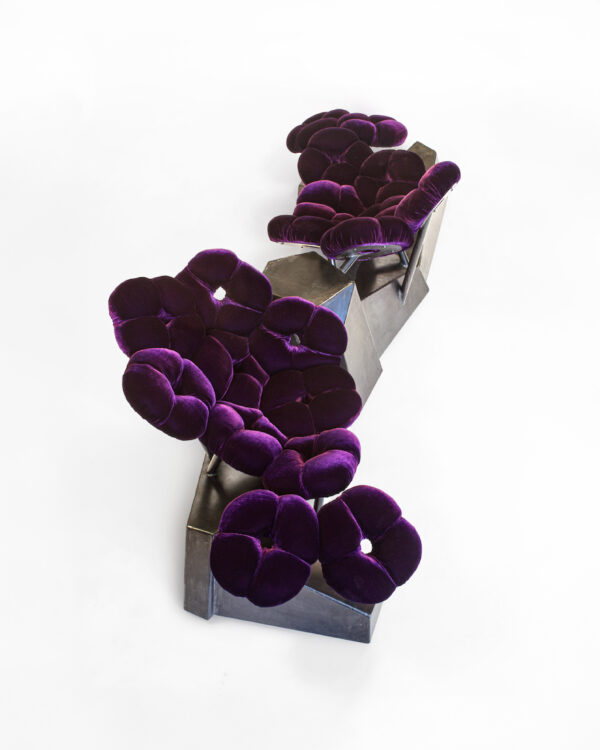
Southern California-based artist and furniture designer Chuck Moffit creates work that marries time-honored techniques with innovative mechanics. His collections balance brutalist processes while incorporating delicate details. Moffit creates his pieces out of glass, steel, bronze, and leather, but is not confined by these materials and is engaged in experimenting with unexpected elements. His work often blurs the lines between art and functional furniture.
COUP STUDIO
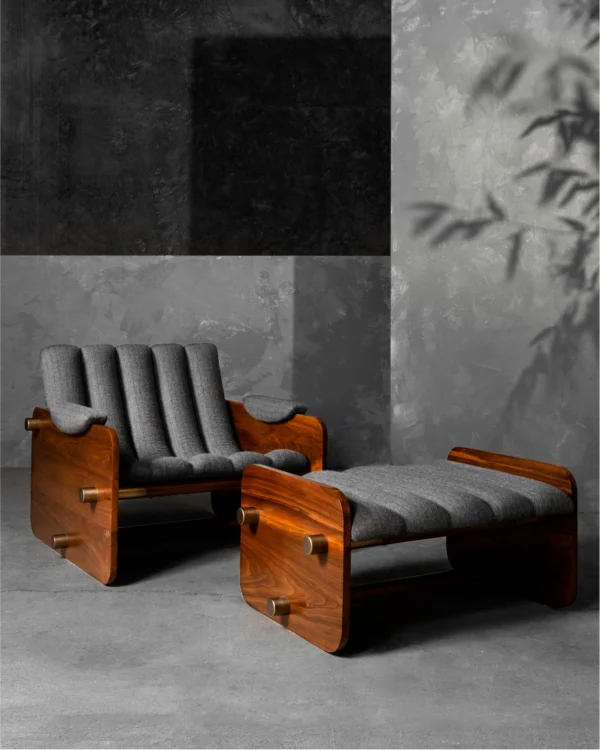
COUP STUDIO, established in 2010 by Darin Geise, blends modern craftsmanship with his deep appreciation for high-quality antiques and vintage furnishings. Inspired by Geise’s extensive travels and keen eye for timeless design, the collection reflects his passion for creating collectible, elevated pieces that stand the test of time. From luxury furniture to statement lighting, each item embodies a commitment to the highest quality and artistry. Designed in-house and crafted by master artisans in California and Italy, COUP STUDIO’s collections emphasize customization, offering unique finishes, custom sizes, and fabric options. Collaborations with renowned artists further enhance the studio’s offerings, with exclusive, limited-edition pieces that highlight its dedication to refined design and impeccable execution. The studio manages every step from start to finish, ensuring every piece is crafted with care and precision. COUP STUDIO is available through COUP D’ETAT Showrooms in San Francisco and Los Angeles, R HUGHES in New York and Atlanta, and BONHAM Gallery in Sydney and Queenstown. Each location provides access to the studio’s carefully curated designs, serving as premier destinations for luxury interior furnishings.

COUP STUDIO Fabrics
Launched in 2024, COUP STUDIO FABRICS offers a selection of luxury textiles, designed by Darin Geise. Reflecting his distinctive personal style and extensive travel experiences, the collection features dynamic color palettes and an intriguing mix of textures and patterns, from rich velvet to refined woven fabrics and cloud-like sheepskins. Each fabric style is crafted by expert weavers who share a commitment to quality and innovation, ensuring materials of the highest standard for the interior design industry. Designed to integrate with Coup Studio’s existing furniture offerings, COUP STUDIO FABRICS adds depth and character to any space, enhancing both modern and classic interiors alike. The collection showcases a broad spectrum of colors and finishes, offering endless possibilities for creative expression in design and application. Whether chosen to upholster a signature piece or to provide a cohesive element to a room, these fabrics represent the brand’s dedication to exceptional craftsmanship and timeless elegance. COUP STUDIO FABRICS is available through COUP D’ETAT Showrooms in San Francisco and Los Angeles, R HUGHES in NYC and Atlanta, and BONHAM Gallery in Sydney and Queenstown.
COUP XX
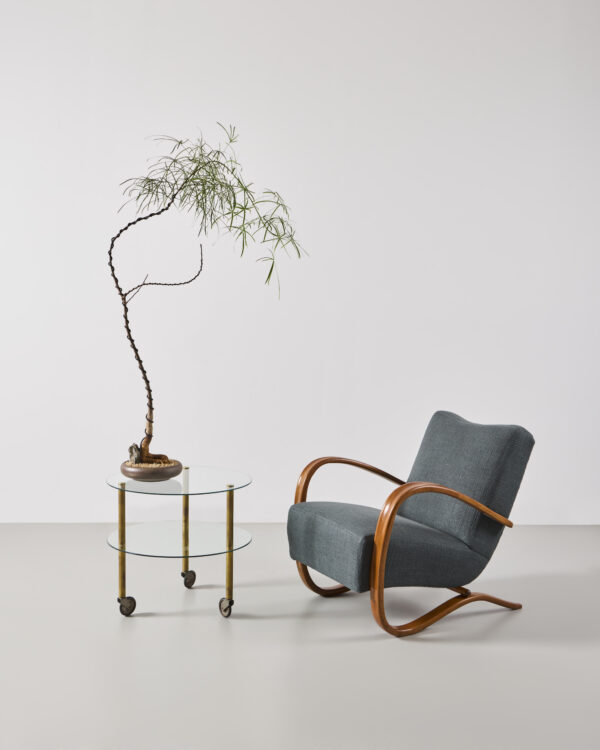
COUP XX, a curated collection of twentieth-century design and an assortment of contemporary pieces that nod to the past. Handpicked by Darin Geise. COUP D’ETAT was established in 2004 by Geise. In a tiny storefront on 18th Street in San Francisco, he conceived an amalgam space, equal parts traditional and modern. Geise quickly developed a following in the San Francisco design community and became a resource for curated vintage and antique furniture. During its 18 years of business, COUP D’ETAT has evolved into a contemporary design gallery. This change has not altered the desire to continue to showcase unique vintage pieces. The backbone of our visual displays is the layering of contemporary and vintage furnishings. Darin’s passion for travel and discovery fuels his commitment to sourcing high quality vintage that is available in both COUP D’ETAT locations.
Damian Jones
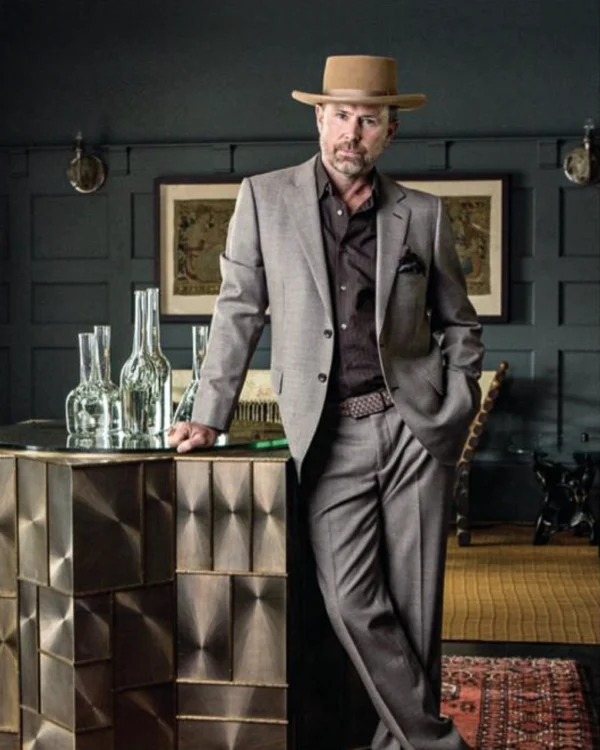
Damian Jones is a Welsh-born, Los Angeles-based furniture designer renowned for his sculptural creations that combine traditional craftsmanship with a contemporary edge. His work blends exotic woods with hand-cut bronze tiles, forming intricate, faceted patterns that highlight his distinct design language. Each piece reflects Jones’ deep reverence for materiality and craftsmanship, resulting in furniture that is both commanding and multi-dimensional. Drawing inspiration from a wide range of influences—from the ornamentation of Italian Art Nouveau to the bold, tactile forms of East African tribal art—Jones’ work defies conventional aesthetics. The intricate bronze detailing, reminiscent of celestial patterns, imbues each piece with a luminous, jewel-like quality. The hand-placed tiles, often irregular and spontaneous in their arrangement, showcase subtle asymmetries that highlight the craftsmanship involved, offering a sense of authenticity that contrasts with the “mass-produced”. Jones’ furniture balances a mid-century aesthetic with functionality, resulting in designs that are at once timeless and distinctly modern. Working primarily on commission, each project is a reflection of his unique process, where the form evolves organically, allowing spontaneity and precision to coexist in harmony.
Daniel Shapiro
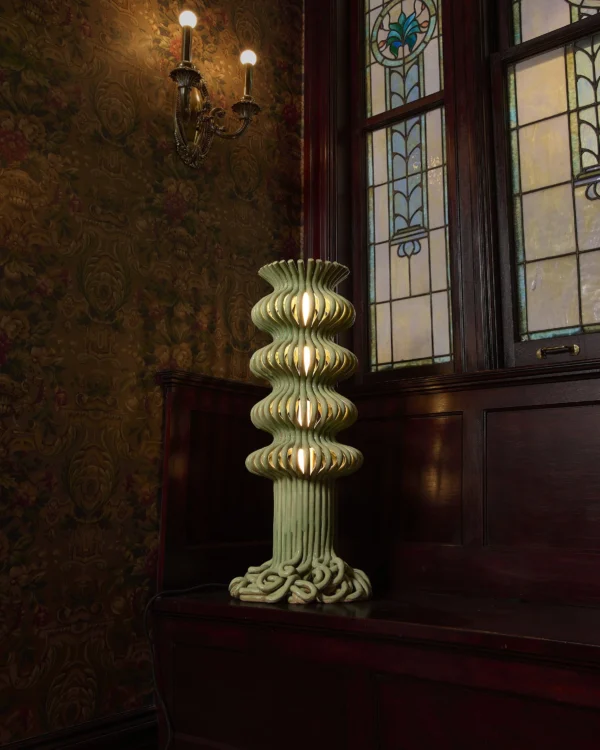
Daniel Shapiro is a ceramic artist based in St. Louis who specializes in creating works that are functional, sculptural, and rooted in imagination. Drawing upon his 15 years of experience as a graphic designer, Shapiro’s approach to each piece is informed by a fusion of the digital world with the organic medium of clay. This synthesis imbues his works with a sense of playfulness and surprising energy, marrying the contemporary with the timeless. Daniel’s artistic journey has taken him through various corners of the United States, starting from a small Missouri town where he spent his formative years to Miami, New York, and Los Angeles, where he honed his skills as a designer. Each of these locations has contributed to shaping his unique design language, leaving a distinct imprint on his creations. In 2017, Daniel was introduced to the world of ceramics when he enrolled in a class at a local pottery studio in Atwater, Los Angeles. Drawing from the foundational lessons of that class, he established his own studio within his Los Angeles residence, embarking on a transformative journey of artistic exploration. With the onset of the pandemic, his creative endeavors gained momentum. In 2021, Shapiro made the decision to return to Missouri, bringing him closer to family and expanding his studio operation. This relocation proved instrumental in his continued artistic growth. Notably, in 2023, Daniel Shapiro received the prestigious Editors Award for Lighting at the International Contemporary Furniture Fair in New York.
Dax Savage
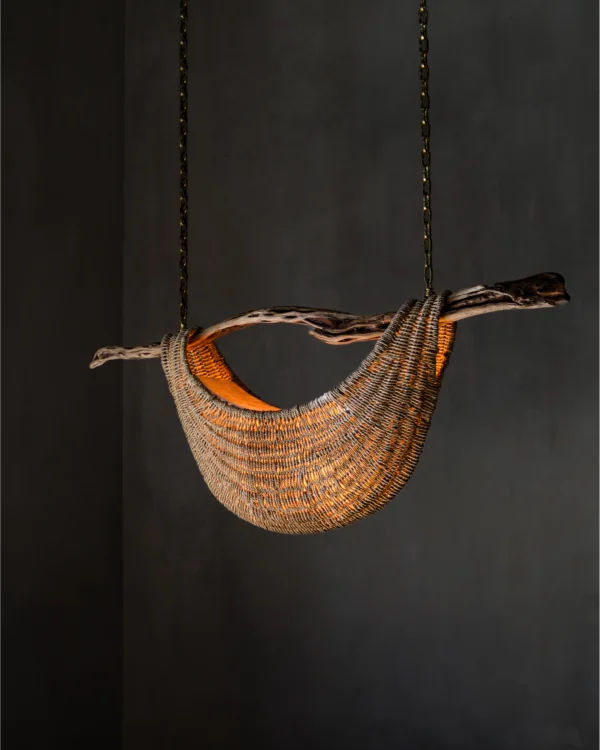
Dax Savage is an artist and craftsman based in Los Angeles, known for creating handmade sculptural baskets and light fixtures. His unique pieces are made from a blend of natural materials such as antlers, wood, rope, stones, and leather. Dax combines ancient weaving techniques with modern technical skills to give a fresh twist to functional art objects. Growing up in the rural landscapes and mountains of Idaho, Dax draws inspiration from animals and nature, which has significantly influenced his artistic journey. His creations resonate with both art enthusiasts and nature lovers due to their captivating and soulful essence. Dax’s work celebrates human ingenuity and individuality as he veers away from mass-produced items and embraces a return to the basics. This ethos imbues his pieces with a sense of uniqueness and character that sets them apart. Being a self-taught, multi-skilled craftsman with a background in jewelry design, Dax occasionally incorporates these elements into his work, adding an extra layer to each piece. Dax’s sculptural baskets comprise custom pieces for residences, commercial spaces, and private collections.

DE LA VEGA
Mark de la Vega founded DE LA VEGA Designs in 2009 as a full-service custom design and build studio. Before starting DE LA VEGA Designs, Mark gained experience in furniture design and production at several notable firms in New York City, including Studio Sofield. Maggie de la Vega is the company’s business director and managing partner, specializing in strategic operations and business development. She holds a Masters in Design Management from Pratt Institute and possesses more than 20 years of management experience in the architecture and interior design industries.
Douglas Fanning
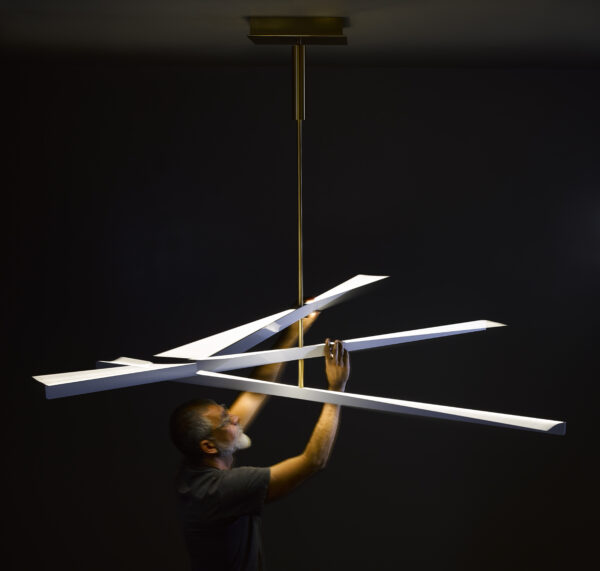
Douglas Fanning is an architect and designer based in Red Hook, Brooklyn, whose practice bridges architecture and collectible furniture through a rigorous exploration of structure, material, and proportion. Trained at Columbia University and shaped by decades of experience in fabrication and prototyping, Fanning approaches furniture-making through architectural principles, with steel and bronze as his primary media. Drawn to the expressive potential of bare materials, his work challenges gravity and expectation, transforming weight into visual lightness through cantilevered forms and refined construction. Often described as “tough beauty,” his pieces balance strict minimalism with subtle organic movement, revealing both technical mastery and emotional resonance. By pushing the boundaries of material and physics, Fanning creates works that feel powerful, precise, and quietly poetic.
Edwin Maldonado
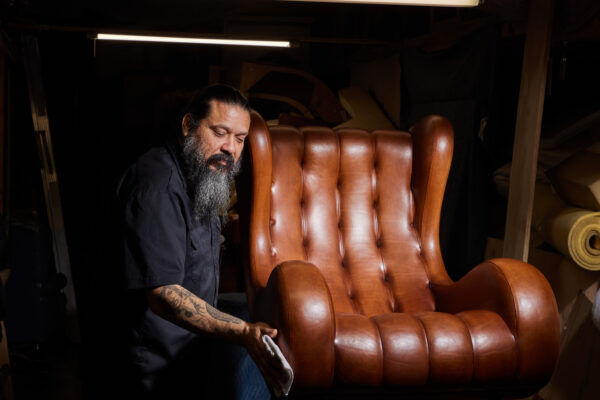
Los Angeles-based leather artisan Edwin Maldonado is a master of the lost art of traditional French leather upholstery. Edwin sculpts leather over wood and metal frames using a technique of wetting and steaming hides. His skill at manipulating and hand-finishing leather has been perfected over decades of working for luxury furniture brands. Maldonado grew up in West Los Angeles. He was an ambitious child but had difficulty finding an outlet for his creative energy. A passion for classic cars in his early teens helped focus his artistic drive; he was drawn to the car customization scene and found he had an aptitude for reupholstering car interiors. His early career was focused on leather upholstery for classic cars. It wasn’t until he met an expert artisan in French leather upholstery that his true path emerged. With the guidance of this mentor, Edwin became a master of this technique. He perfected his craft by creating high-end furniture pieces for luxury brands, antique dealers, and LA-based interior designers. Through the encouragement of a fellow artist, a path emerged, giving Edwin the push to incubate and present his own designs under his own name. He took the leap in 2021 and formed a small but exquisite collection, synthesizing classic French leather techniques with bold designs. Coup d’Etat is honored to be Maldonado’s exclusive West Coast representative.
Entrelacs
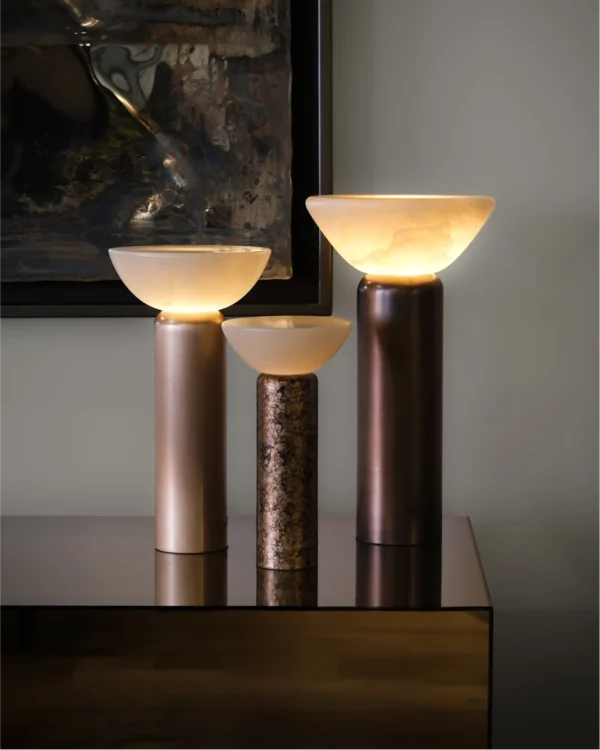
ENTRELACS is the quintessential expression of craftsmanship honed since 1982. To refine pure natural alabaster into raw, simple shapes, each piece is subtly framed in real casted bronze. Materials born of the ages, and crafted into plain, durable pieces of timeless appeal. Trained in techniques including moulding, Bronze casting, chasing and patinas, Yves Macheret and his dedicated team design pieces crafted from natural materials, seeking their simplest expression to convey a sense of elegant modernity. Clean, uncluttered lines enhance the warm appeal of Bronze, providing a striking contrast with the raw quality of cold Alabaster. Original beauty requires no reinterpretation. HAND-MADE IN FRANCE Drawing from more than 40 years of craftsmanship, each of our pieces is shaped by expertise passed down from father to son, born of a passion for bronze and artistry. Based near Le Mans, France, in the rural Perche region, the factory houses the entire manufacturing process — from design to finishes — to create exceptional pieces fashioned by human hands. Sketching, proofing, mould-making, casting, polishing, assembling and wiring — every step is performed in-house by our artisans. Our company has been awarded the EPV (Living Heritage company) label, and is a member of Ateliers d’Art de France.

Erwan Boulloud
French artist, designer, and artisan, Erwan Boulloud graduated from the École Boulle. Beyond aesthetic success, he considers a work to be truly accomplished in its ability to generate descendants, which for him is a sign of its depth. His practice unites sculpture and design in an exploration of transformation, lineage, and metamorphosis, offering a body of work that engages both artistic and metaphysical questions. Erwan Boulloud employs a wide range of materials, harnessing the potential of each to reveal its uniqueness. For Boulloud, matter is a field of experimentation: he burns, polishes, strips, dissects, and reconstructs in order to uncover hidden facets and depth. Guided by a Darwinian logic, his creations emerge in a state of perpetual effervescence, adapting and evolving to form lineages, crossbreeds, or mutations before eventually disappearing. Each assembled work carries within it a narrative that unfolds through its forms, materials, and movements. Fascinated by organisms and minerals—stones, fossils, corals, meteorites, insects—Erwan Boulloud gravitates toward anything that invites reflection, meditation, and wandering. This fascination breathes life into his sculptural furniture, which blurs the boundaries between the animate and the inanimate. With poetry, Boulloud draws us into a universe where history and storytelling intersect, erasing the line between reality and dream. His works, true hymns to metamorphosis, weave connections between memory, esotericism, and science, reflecting on our relationship to life, its creations, and the mysteries they provoke.

Felix Muhrhofer
Felix Muhrhofer (b. 1975, Vienna) is an Austrian designer working at the intersection of industrial design, interior architecture, and hands-on craftsmanship. Educated at the University of Applied Arts Vienna and ELISAVA in Barcelona, Muhrhofer began his career working from a small, improvised workshop, using it as both laboratory and proving ground for material, form, and production logic. From the outset, his process has been defined by an insistence on testing ideas through making. By refining traditional craft techniques and embracing an analog, highly controlled workflow, Muhrhofer has developed a body of work marked by formal clarity and a craft-led approach to production. Early projects included a modular terrazzo kitchen system with a single-cast countertop and integrated sink, a design so rooted in daily use that it led him to establish Vienna’s first cooking club, an ongoing platform for cultural exchange. This commitment to functionality as lived experience continued with the development of the Magic Wall, a fully magnetic wall system conceived as an active extension of the kitchen, transforming storage into a flexible spatial tool. Alongside furniture and product design, Muhrhofer’s practice extends to architectural and spatial projects, including stage design for the opening of the Vienna Boys’ Choir concert hall and the interior architecture of Vienna’s R&BAR. Across disciplines, his work reflects a consistent belief in material honesty, precision, and design shaped by real-world use.

Gallery Elise
Gallery Elise is a new design platform founded by Alison Legge, co-founder of Élan Atelier. Building on two decades in the international design world, Alison continues her long-standing creative partnership with Muse Design, the atelier behind the sculptural works admired by designers and collectors worldwide. As Élan Atelier evolves, Gallery Elise carries forward this refined vision, presenting the Muse Collection alongside our own emerging works grounded in craftsmanship, material richness, and timeless form. A new chapter in design, rooted in artistry, collaboration, and enduring beauty.
Gregory Beson
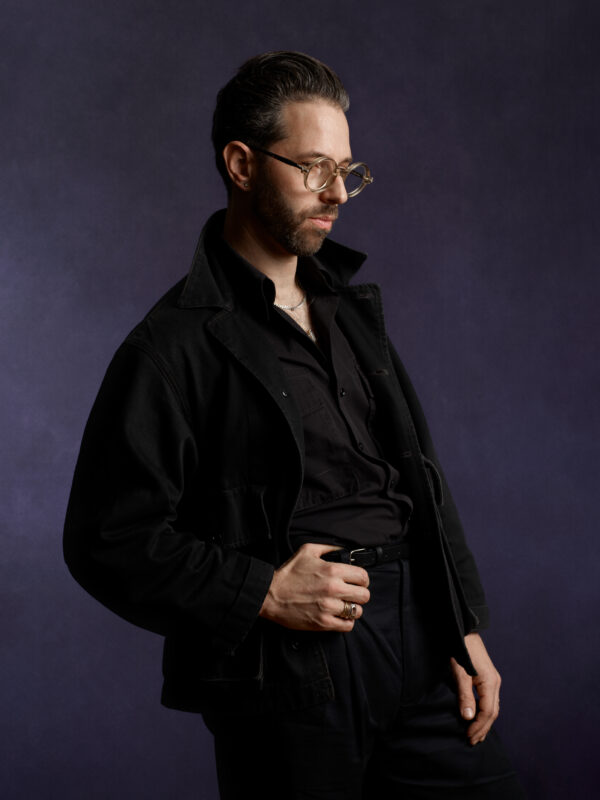
Gregory Beson is an American-born designer and sculptor who launched his studio practice in 2018 in New York City, focusing on material culture across furniture, artifacts, and lighting. Working from his New York City atelier, Beson designs new pieces and collections, crafting or prototyping each work by hand for private clients, brands, galleries, and institutions. His work has been shown globally and is represented by galleries in New York City, Genève, Milan, and now through Coup D’Etat. A New Englander at heart, Beson remains deeply connected to the seas and stones of the Northeast. Music was his first medium before he transitioned to the tangible, shaping objects that reflect care, intention, and a sensitivity to lived experience. He holds an undergraduate degree in product design and a master’s degree in industrial design from Parsons The New School for Design, where he also taught from 2018 to 2023. He currently lives and works in New York City. Guided by a belief that furniture is not simply an accessory to daily life, but an integral part of our shared experience, Beson seeks to make pieces for those who wish to populate their lives with considered objects — furniture to be lived on, in, and with, and ultimately passed on. With such importance and power, he believes these objects should be crafted with care, tenderness, and deep consideration.
Harry Siter
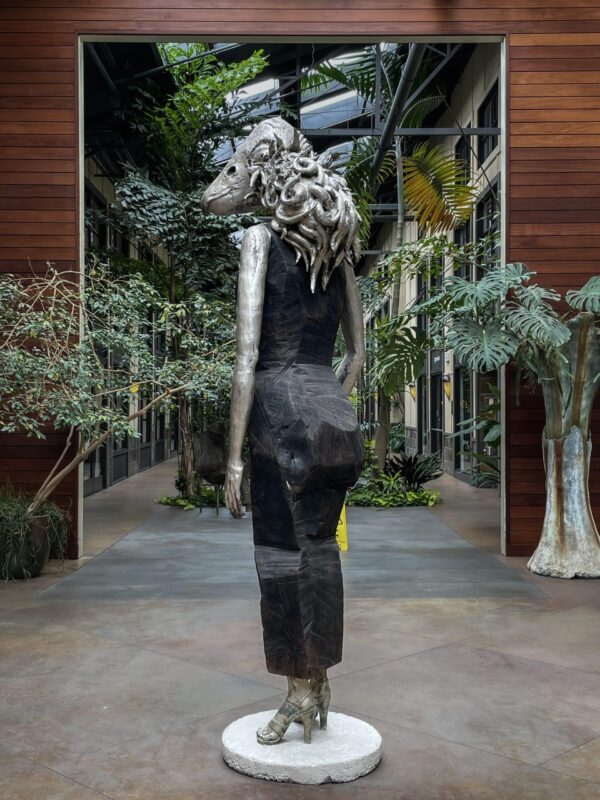
Harry Siter is an American artist and furniture maker whose work is rooted in direct engagement with raw materials and the act of making itself. Since the early 1990s, Siter has worked almost exclusively with whole trees, transforming trunks into furniture and sculptural forms through a process that blends invention, engineering, and physical labor. Using chainsaws to shape his materials, Siter favors straightforward, time-tested methods for surfacing and finishing, allowing the character of the wood to remain present. Over decades of practice, he has developed a deep technical understanding of how to stabilize thick slabs of wood and integrate them with metal, expanding both the structural and expressive possibilities of his work. Rather than beginning with standardized lumber, Siter approaches each piece as a response to the individual tree itself—its size, density, and inherent limitations guiding the final form. This process of discovery, shaped by material resistance and physical endurance, results in objects that feel simultaneously elemental and deliberate. His work speaks through mass, texture, and proportion, giving new life to materials often considered inert, and asserting making as an act of continual learning and transformation.
J Liston Design
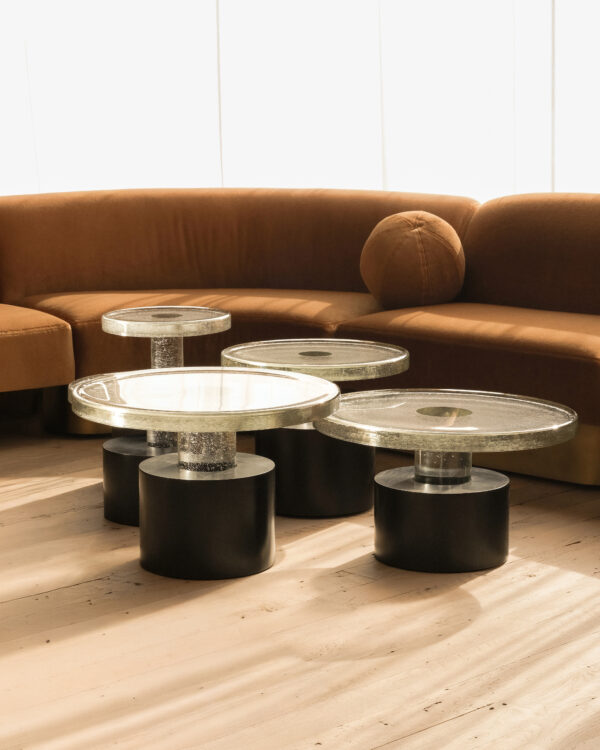
John Liston is the founder of J Liston Design, a San Francisco-based furniture and art studio established in 2012. After 15 years of crafting other artists’ visions for various companies, the journey to becoming a prominent furniture and lighting designer began, rooted in a background of jewelry making, metalsmithing, and foundry work. John felt a yearning to find his own voice in the creative process. With determination and passion, he began crafting his own designs in his spare time. A pivotal moment came after participating in the American Craft Council show at Fort Mason in San Francisco. His designs were well received, with almost all pieces selling at the exhibition, affirming the potential for a sustainable business. Inspiration for his designs springs from a vast array of sources, from architectural nuances to the beauty of nature. Rain screens, perforated sunscreens, and louvers are examples of the details that inspire John, and he finds ways to express them in his work by adding texture, movement, and natural materials. The designer’s primary materials are steel and glass, but currently he has been drawn to working with brass, which has dominated his newest designs.
J McDonald
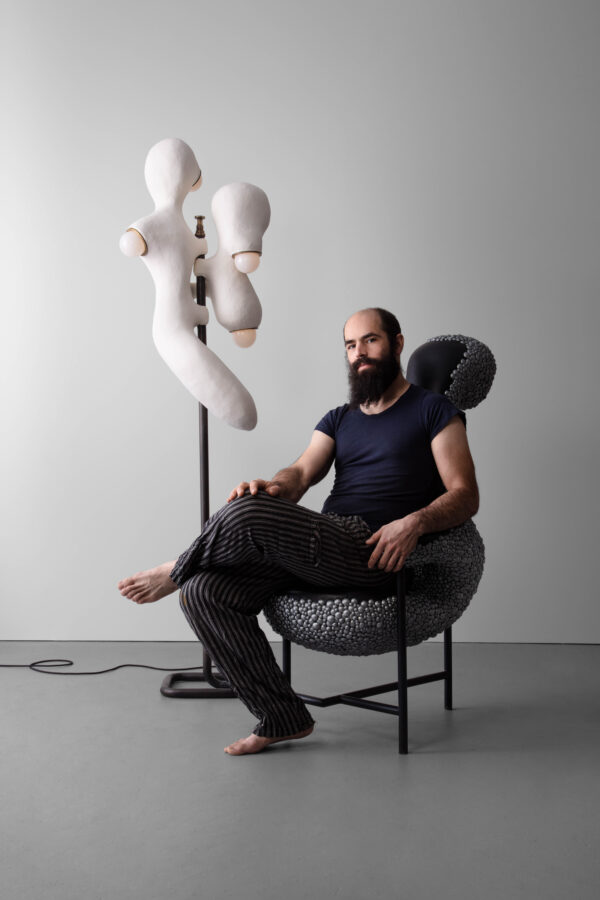
J McDonald is an artist and designer based in Brooklyn, NY. His work explores the intersections of the built environment, the natural world, and human psychology, examining the complex relationship between humanity and nature. Drawing on his background in architecture and environmental design, craft and metalwork, conceptual art and sculpture – McDonald’s practice brings rational, architectural geometries into dialogue with intuitive, organic forms – creating dynamic and refined works of art that challenge perceptions of space, materiality, and the human experience. McDonald’s sculptures, furniture, and large-scale installations probe the tensions between the natural and constructed worlds, manifesting the rational and neurotic side along with the more wild and intuitive side of the human mind. His work is not merely inspired by nature but is an inquiry into the ever-evolving dialogue between humanity and the natural world. Working across a variety of materials and scales, McDonald’s creations invite reflection on our relationship to both the environment and ourselves, offering an immersive experience into a fantastical world that imagines and encourages a deeper connection with the world around us. His work has been exhibited widely in New York City and internationally, at venues such as Objective Gallery, Bonham Gallery, Room57 Gallery, and The KnockDown Center, as well as at major art fairs like Design Miami and NOMAD. McDonald has completed artist residencies at Taliesin West, The McColl Center, The Millay Colony, and Blue Mountain Center, and has created large-scale works at Taliesin West School of Architecture, Franconia Sculpture Park, and in collaborations in Ghana and Mali. His art provokes reflection on human existence, challenging conventional thinking and fostering a sense of interconnectedness with the natural world.

J.M. Szymanski
J.M. Szymanski is a New York–based designer known for bold, sculptural furniture and objects. His production line explores raw materials, unique textures, and striking geometries—drawing from a wide range of global influences. Jake Michael Szymanski’s creative foundation was shaped by time spent in Nepal, Spain, and Morocco. He later studied interior design at the Fashion Institute of Technology and the School of Visual Arts in New York, and worked with designer William Sofield before launching his own studio in 2014. His work has since gained recognition from top architects, designers, and collectors.

JG SWITZER
JG SWITZER was founded in 2018 by Jessica Switzer Green to create the world’s most exquisite artisan blankets, resonating with those who value durability and handcrafted beauty. The brand quickly became synonymous with comfort and luxury, offering products that are both functional and artful. Operating from The Barlow in Sebastopol, Northern California, this women-owned workshop emphasizes craftsmanship. It serves as a design studio, showroom, and retail space where the commitment to handmade quality is palpable. JG SWITZER is committed to sustainability, using only natural fibers like wool, silk, linen, cashmere, organic cotton, mohair, and alpaca, which are sourced primarily within a 100-mile radius as part of its dedication to local ecosystems and community health. The brand’s HERITAGE SHEEP felted wool collection showcases their unique “Painting With Wool” technique, where different shades of natural wool are layered and felted to create plush, textured fabrics. As a proud member of the local Fibershed, JG SWITZER supports sustainable fiber systems that promote not just the health of the environment but also that of the community, crafting more than just blankets—they create stories woven from the finest materials.
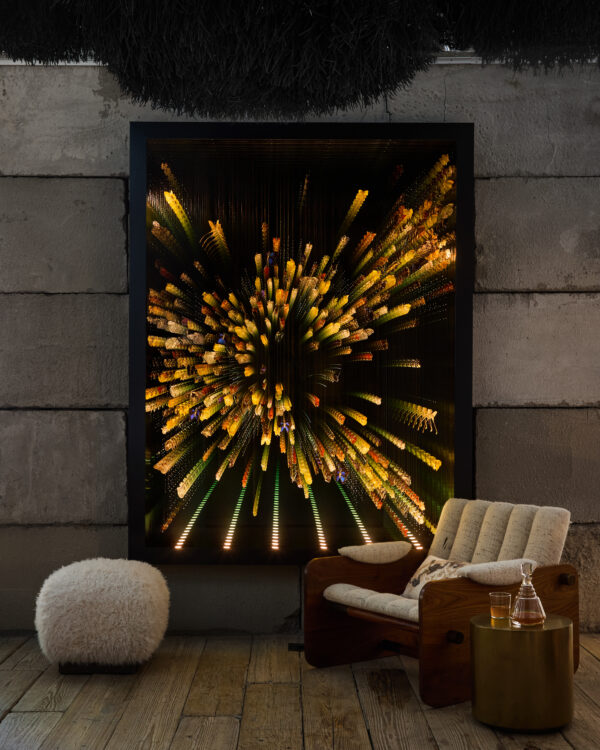
Jocelyn Marsh
Jocelyn Marsh is a Los Angeles based artist whose primary mediums include installation, sculpture and lighting design. Central to her work is the theme that existence springs from the unknown space between death and life, the void that causes mixed emotions throughout the world. Focusing on the thrilling fact that from nothing comes everything, Marsh celebrates this unknown space imparting upon her work a sense of reverence, wonder, and refinement.
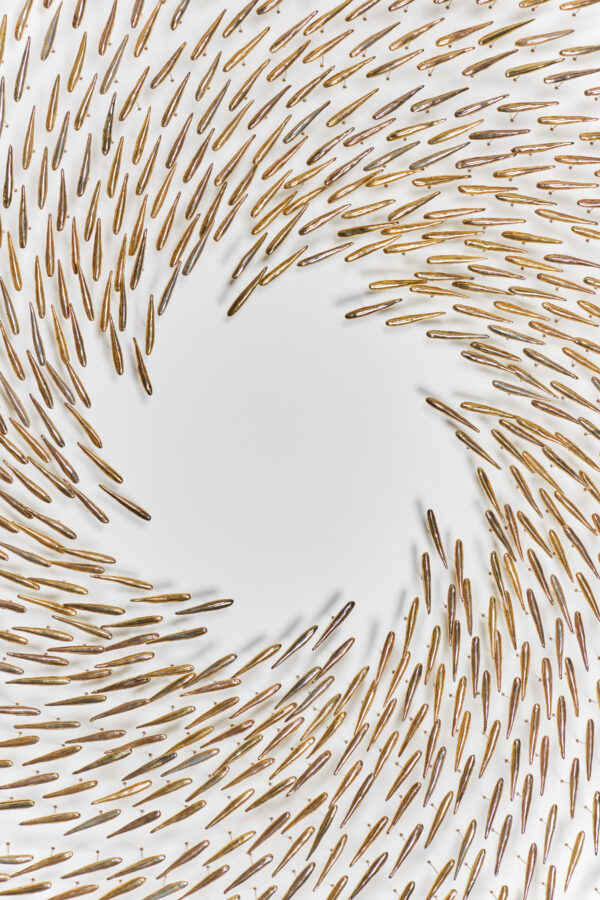
Kalliopi Lydaki
Kalliopi Lydaki (b. 1963, Athens) is a Greek ceramic artist whose practice bridges sculpture, light, and architectural installation. She began her artistic training in Athens, studying pictorial arts and sculpture in the atelier of painter Jiorgos Vogiatzis before turning her focus toward ceramics following formative time spent in the studio of ceramicist Alda Reis. Lydaki established her first atelier in Chania, Crete, where she developed sculptural works in porcelain and stoneware, firing at high temperatures and refining a practice grounded in material discipline and technical precision. In 2012, she relocated her studio permanently to Florence, marking a shift toward what she describes as “light art”—a body of work centered on porcelain and clay forms finished with glazes incorporating precious metals. These intimate ceramic objects became the foundation for larger-scale wall installations, composed in varying sizes and configurations. Through subtle modulation of color, surface, and reflectivity, Lydaki enhances their dimensionality, allowing light to activate the work and alter its perception across space. Her practice remains rooted in ceramic tradition while expanding into sculptural environments that balance delicacy, rhythm, and luminous presence.
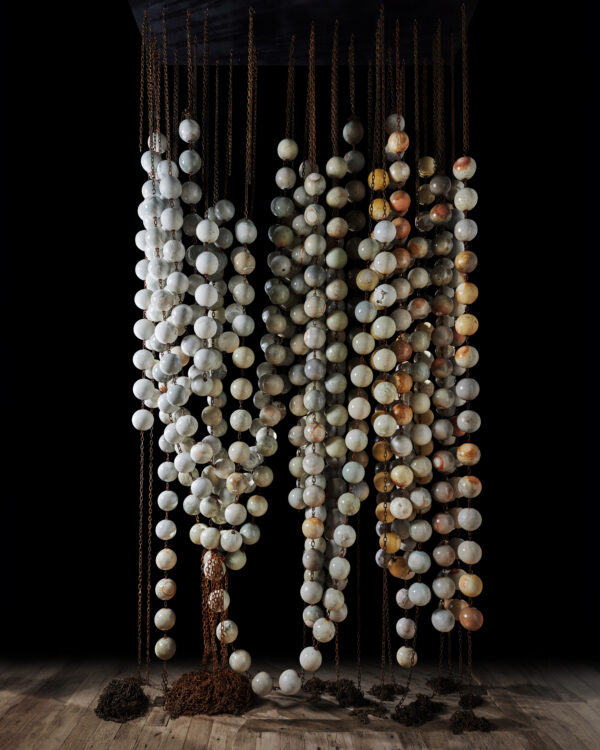
Kelly Farley
Working from his Pope Valley studio in Napa, ceramicist Kelly Farley creates large-scale suspended sculptures that are both singular and deeply evocative. His work explores the beauty of the individual while embodying the collective consciousness that binds us together. Each piece is a testament to Farley’s intensive and ritualistic process, undertaken only two to three times a year. Farley’s journey begins with sourcing clay from diverse locations, ranging from the foothills of the Sierras to mines across the country. This carefully selected clay is combined, molded, and glazed using Farley’s proprietary techniques and recipes. The sculptures then undergo an elaborate firing process in an ancient Japanese Anagama kiln, where the unpredictability of wood-fired ash creates a unique surface and patina on each sphere. The ten-day firing is a collaborative effort, drawing ceramicists from across the nation to Pope Valley, where they work tirelessly around the clock to bring Farley’s vision to life. Once the firing is complete, Farley meticulously assembles the spheres, allowing each to interact harmoniously within its space. Through this ambitious, entirely hand-done process, Farley not only creates physical works of art but also manifests the profound journey of creation itself.
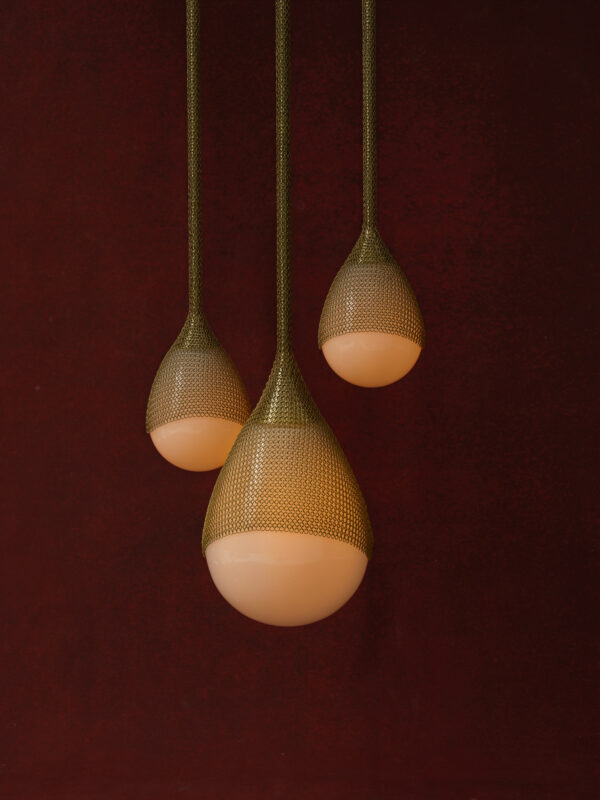
Konekt
Konekt is a furniture and lighting design studio intent on engaging the senses. The studio’s collection of works is brought to life through a thoughtful exploration of materiality, influenced by a wealth of inspirations from historical references to the natural world. Handmade from natural materials that age and patina gracefully, each piece is informed by high-quality craftsmanship and distinguished by an embedded human touch. Unexpected materials like horsehair and chainmail are combined with traditional ones, highlighting the juxtaposition of contrasting textures and finishes. This cohesion creates a balance between opposing characteristics—strength and fragility, solidity and fluidity, refinement and playfulness—embodying Konekt’s signature sensibility. Founded in 2015, Konekt is a modern family business led by Eric, Helena and Natasha Sultan. Through an innate shared vision and aesthetic, mother-daughter design team and creative directors, Helena and Natasha, take an intergenerational approach to design cultivated by their own creative backgrounds. Eric oversees operations and spearheads business initiatives. Much like Konekt’s creative acuity and reverence for story, each piece of furniture and lighting holds heirloom qualities that can be embraced by generations to come.
Leslie Nix
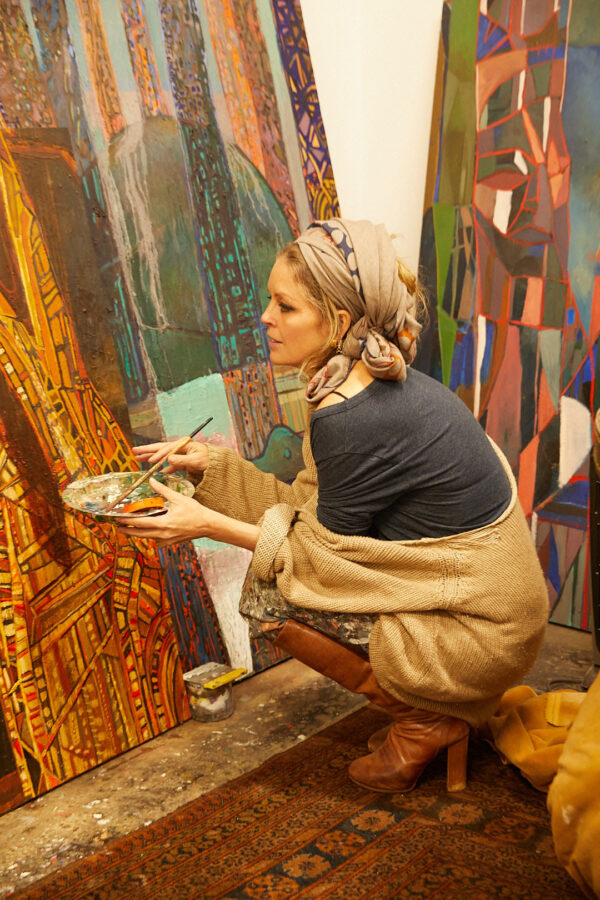
Leslie Nix is a Los Angeles, CA-based artist whose use of light, color, and texture are reflections of her experiences moving through the world. After graduating from the Savannah College of Art and Design with a BFA in art by the age of 19, Leslie set off in her ‘71 Ford pickup, traveling through the US, painting and selling her works. Her wanderlust extended to spans of time spent visiting over 40 countries, gathering inspiration, and establishing studios in Berlin, the Czech Republic, Chicago, North Dakota, and finally taking up permanent residence in Los Angeles. Her living and studio spaces must be visually stimulating and filled with objects she finds on her travels or in a special location—souvenirs—or pieces that feel like old friends. Leslie is intrigued by things that hold memories, time, or the traces of somebody’s hands. Objects that emphasize form over function are of great interest to Nix. Nix’s process relies on a meditative practice, with an emphasis on the physical creation of the works, which she views as more important than the end result. Nix works in the mediums of wax, oil paint, cast bronze, and glass. Her travels, including her experiences in Africa, have influenced her recent body of work.

Linda Fahey
Linda Fahey is a ceramic artist and proprietor of the Yonder studio and shop in San Francisco. Linda creates sculptural and functional ceramics, specializing in hand-built forms with illustrative surfaces. With a background in illustration, Linda takes her drawings to the surface of her vessels and ceramic tiles. Linda’s talent is sought after for large-scale site-specific projects, including custom tile design. She incorporates design influences directly from a life lived on the northern California coast and from her deep respect of the natural world.

Mary Wong
Mary Wong is a Philadelphia-based artist and furniture designer known for her distinctive fusion of stained glass and naturally finished wood. Her work explores the intersection of function and fine art, creating one-of-a-kind pieces that celebrate the beauty of natural variation. Each design features hand-drawn geometric patterns and individually selected glass, ensuring that no two creations are ever alike. This uniqueness is not only intentional but integral to her artistic process, imbuing every piece with its own story and character. Originally from California, Mary began her creative journey studying general theater arts, where she developed a strong interest in prop design and set decorating. This led her to pursue further education in textile and surface design, where she refined her eye for detail, pattern, and material exploration. These foundations continue to inform her practice, blending theatrical sensibility with refined craftsmanship. Mary’s work is currently on display in California at Coup D’Etat showrooms in both San Francisco and Los Angeles. Through the interplay of stained glass, natural wood, and ambient light, Mary creates pieces that glow with soft color and warmth—offering a sensory experience that is both visually striking and organically harmonious. Her debut series, The Melange Collection, marks a fresh direction—embracing a lighter, more luminous palette while maintaining her signature fusion of glass, wood, and light.

Michal David Green
Michal David Green is a San Francisco–based artist known for one-of-a-kind sculptural works that combine naturally sourced wood with 24k gold. Using hand-selected wood and a proprietary gilding process, Green applies gold directly to the surface, allowing the natural grain and form to remain visible.
MNEME
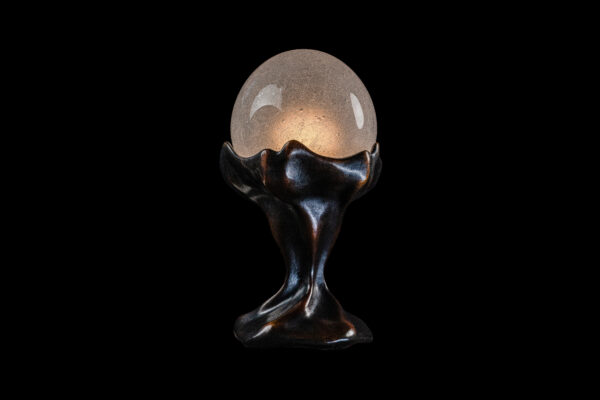
MNEME by Patrick James Curry unfolds as a meditation on memory, transformation, and the quiet persistence of form. Drawing on the artist’s fascination with primordial beauty and the unseen life of matter, the collection blurs the line between sculpture and mythology. Curry’s biomorphic creations emerge as relics from an imagined world—dreamlike and unfamiliar, yet imbued with an innate sense of recognition. The inaugural LUMARA Collection introduces these forms through illumination. Inspired by lunar caves and atemporal rock formations, each work evokes the quiet suggestion of life blooming in the unlikeliest places. Sculpted in bronze and glass, the pieces capture a dialogue between the organic and the otherworldly—botanical, mineral, and something in between. Through light, Curry reveals the delicate resilience and transformative energy embedded within his imagined terrain. Fabricated in collaboration with master artisans in Northern California, the LUMARA Collection bridges digital innovation with traditional craftsmanship. Each limited-edition work serves as both object and myth, a vessel for memory and metamorphosis. Together, they invite reflection on what endures beyond perception—illuminating the hidden, the ancient, and the eternal pulse of creation itself.
OCHRE
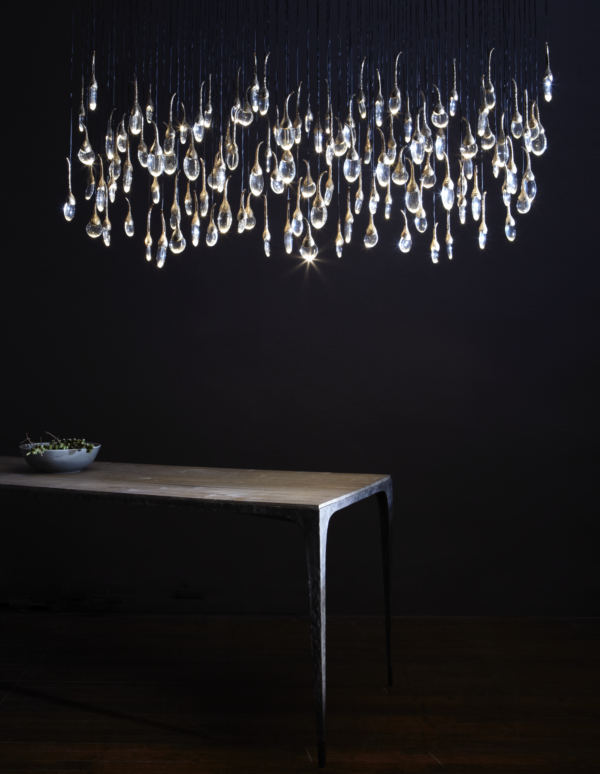
OCHRE designs furniture, lighting and accessories for the interior. Their designs place equal importance on harmonious proportions, luxurious materials and matchless craftsmanship. British designers Joanna Bibby and Harriet Maxwell Macdonald, who shared an aesthetic for the beauty of the understated, founded OCHRE in 1996. Solenne de la Fouchardière became the third partner and fellow designer four years later. Along with selling directly to individuals, OCHRE’s clients are leading international interior designers and architects. OCHRE has worked on many custom projects for private residences, boutique hotels and restaurants throughout the world. Today, OCHRE is acclaimed internationally with showrooms in London and New York, and continues to grow organically whilst staying true to its considered design roots. It is the destination for those in search of discreet glamour – the hallmark of OCHRE.
OCHRE WILD
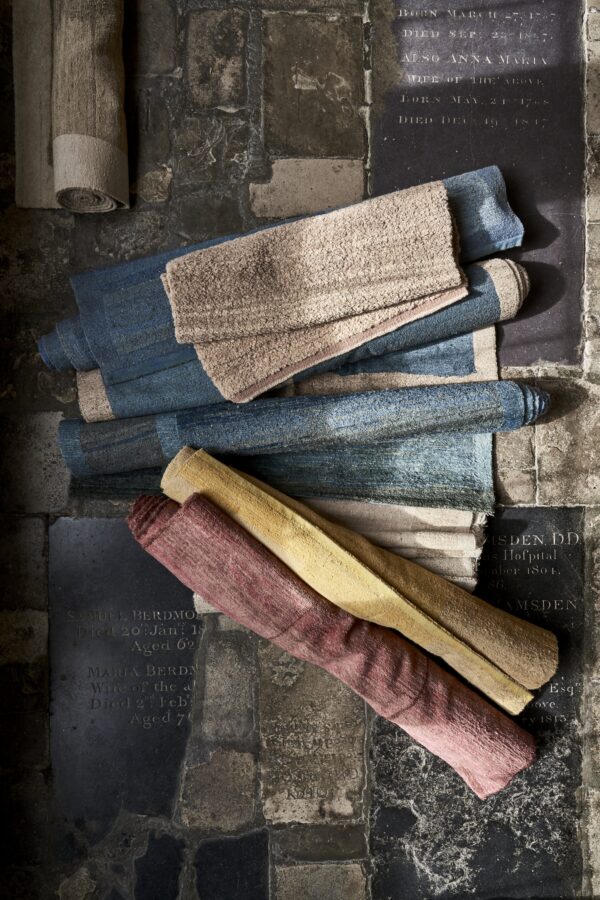
The OCHRE WILD collection showcases a captivating array of rugs, crafted in Bengal using ancient techniques and natural dyes. Every OCHRE WILD rug is meticulously handcrafted, from the initial yarn-making and dyeing process to the intricate weaving and finishing touches. Both the Indo-Tibetan and flat-weave Dhurrie rugs are made with a diverse selection of fibers and natural dyes, resulting in a harmonious display of colors and textures reminiscent of a painter’s masterpiece. All the raw fibers used in OCHRE WILD rugs are sourced directly from local farmers, ensuring a direct and ethical supply chain. The cultivation methods employed by these farmers are organic, devoid of pesticides and chemical fertilizers. By combining organic natural dyes with hand-spun raw organic fibers, the rugs exhibit vibrant and lively colors. The absorption of the vegetable dye varies across different fiber types, resulting in captivating variations in depth and hue. Throughout the natural dyeing process, the master craftsmen rely on ancient recipes, continuously refining and adjusting them to achieve the remarkable spectrum of OCHRE WILD colors.

Patrick Weder
Patrick Weder is a celebrated furniture and lighting designer best known for his refined, handcrafted cabinetry made from walnut, maple, and concrete. His choice of wood is a vital part of each design. He considers the wood grain and texture and how they relate to his concept for the final design. Swiss-born, Weder has great passion for nature and the environment; his designs maintain a focus on sustainability and are built to endure over time. Based in Brooklyn, Weder launched his own studio in 2001. Blending architectural sophistication with organic sculptural forms, he challenges traditional boundaries of functional design by developing original sculpting techniques using accessible materials such as concrete and paper. Weder’s Honeycomb Light Sculpture Collection is a labor of love made from wire and paper, with a building process that requires extreme detail and patience. Large sculptures take over 300 hours to form. Each piece is one-of-a-kind and created by Weder in his Brooklyn studio.

Peter Boiger
Peter Boiger is an internationally renowned sculptor, best known for his Holocaust Memorial in Jerusalem. Born in Altotting, Germany, Boiger currently resides and works in Northern California. Boiger learned woodworking at his grandfather’s carpentry shop. When he was about 15, he became aware of the works of Henry Moore and other 20th-century sculptors. Peter’s influences include African, Japanese, and pre-Columbian cultures. He works in several mediums: bronze, stone, and wood. Coup d’Etat has been honored to represent select works from the Peter Boiger Collection since 2012.

Refractory
Founded in 2021 by Angie West from Texas and Alberto Vélez from Bogotá, Refractory is a furniture, lighting, and object design studio based in Chicago. The studio conceives and produces rigorously crafted works in a language that is distinct within American and contemporary design landscapes. Layering traditional methods with modern tools, Refractory is both an evolution and an extension of a community of artisans who seek to create in the space where art meets collectible design. The studio’s inspiration stems from a profound appreciation for the frontier’s terrain and geology. Each creation is unique, born from heat, chemical reactions, and human touch, resulting in variations and imperfections. An authentication code ensures genuineness and origin. Refractory shares space with its sister company, West Supply—an esteemed design, art fabrication studio, foundry, and glassworks atelier. Here, skilled industrial designers and artisans utilize traditional techniques infused with modern methods. Refractory contributes to an ongoing revival of American craftsmanship and small-scale urban manufacturing.
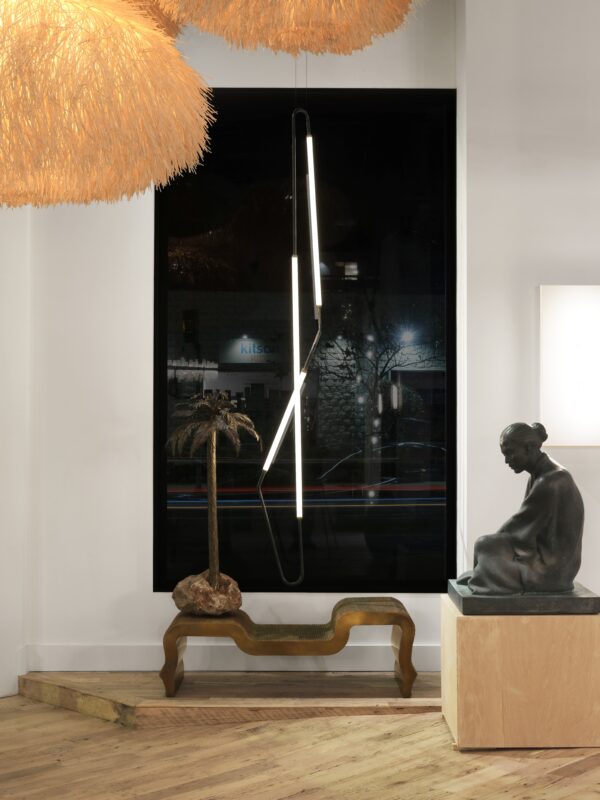
Rose Gold Society
Rose Gold Society is a design brand specializing in the extraordinary and the unexpected. We design lighting, furnishing, and architectural artworks available through high-end showrooms and designers, combining new design and fabrication technologies with master craftsmanship. Our network of production studios and creative resources means we are able to design and deliver spectacular project-specific artworks and ensembles for luxury product lines, developments, hotels, restaurants, and private collectors. Magnus has been working in decorative arts for 25 years. With a background in luxury industrial design, interior design, and industrial art, Magnus has created decorative arts and lighting installations for designers, luxury product brands, developers, architects, hospitality, and private collectors. He is also passionate about creating events utilizing lighting and social art-making for collaborative social immersive experiences where he uses light and creative leadership to collaborate with a team of creatives to set the mood, inspire people, or challenge the attendees’ perceptual expectations. Building on his success as an industrial artist, social experience artist, and lighting designer, Magnus’ creative interests currently include social philosophy, the consciousness of perception and interaction, the psychology of personal values, and creative leadership. His current creative exploration is developing new experiential and community generating social spaces and artworks, with the intent to introduce fresh subtlety and meaning into the places in which we strive and aspire to be our best individually and in partnership.

Sharon Beals
Sharon Beals, a San Francisco-based photographer since 2007, specializes in documenting bird nests from the nineteenth and twentieth centuries. Her book, Nests: Fifty Nests and the Birds That Built Them, reveals diverse materials—from spider webs to found objects—crafted by birds to protect their young. Beals’ work emphasizes the nests’ intricate forms and vibrant egg colors, showcasing the ingenuity of these natural architects. Her photography, featured in institutions like The California Academy of Sciences and The Smithsonian’s American Museum of Natural History, serves as a vital research tool. It provides insights into birds’ habitats, DNA, and survival challenges, aiming to inspire conservation action. Through her detailed depictions of these artful nests, she hopes to cultivate a greater appreciation for their creators and motivate protective efforts. Beals’ work captures the precarious balance of survival that birds face amid habitat loss and climate change, aiming to foster both appreciation and conservation action. Her photographs, including specimens preserved at institutions like The California Academy of Sciences and The Smithsonian’s American Museum of Natural History, are invaluable for research. They offer profound insights into the birds’ habitats, DNA, diseases, and other survival challenges. Through her detailed depictions of these artful nests, she hopes to cultivate a greater appreciation for their creators and motivate protective efforts.

Skram
Skram Furniture Company, founded in 2001, is based in the Piedmont region of North Carolina. The company has earned a domestic and international following for its distinctive approach to modern design—one that emphasizes sustainable practices, authentic materials, and extraordinary workmanship. Skram craftsmen utilize a mix of traditional techniques and cutting-edge fabrication processes to create products that meet the highest standards of precision and durability. With expertise in a wide range of materials–including timber, hardwood veneer, assorted metals, leather, and stone–the company’s products are uniquely suited to diverse settings. Skram’s furnishings are specified in a broad range of environments from residential to commercial and hospitality. Skram products are made with a deep awareness of the impact our manufacturing has on our community and on our planet. We use only non-toxic adhesives and industrial strength, low-VOC water-based polyurethane finishes. Our timber is locally sourced as much as possible, and we are committed to broadening our offering of certified timber options as they become available in consistent quantity and quality.